What is dyslexia?

In July, 2020, the following definition of dyslexia was included in Iowa Code.
"Dyslexia is a specific learning disability that is neurobiological in origin. It is characterized by difficulties with accurate and/or fluent word recognition and by poor spelling and decoding abilities. These difficulties typically result from a deficit in the phonological component of language that is often unexpected in relation to other cognitive abilities and the provision of effective classroom instruction. Secondary consequences may include problems in reading comprehension and reduced reading experiences that can impede growth of vocabulary and background knowledge."
Dyslexia occurs on a continuum. Not all students exhibit the same characteristics or signs.
Understanding Dyslexia: Myth vs. Facts
The National Center for Improving Literacy provides more information about dyslexia.
They also provide this Myths vs. Facts document to break down the truth about dyslexia.
Possible Indicators
The following are possible indicators of dyslexia. Individuals with dyslexia will have more than one indicator, but may not have all of them. The presence of some of these indicators does not necessarily mean that an individual has dyslexia. Keep in mind, this is not a complete list of indicators.
- Difficulty rhyming words
- Difficulty remembering letter names and sounds
- Inability to sound out unknown words
- Slow, choppy, laborious oral reading
- Misreading or omitting common, short words
- Inconsistent sight word recognition
Resources
These resources have been compiled to help educators as well as families learn more about dyslexia. Educators, check with your local AEA to see if these materials are available for loan.
Online Resources
- Decoding Dyslexia Iowa (parent advocacy group)
- Understood: Dyslexia Simulation
- International Dyslexia Association
- International Dyslexia Association - Fact Sheets
- Knowledge and Practice Standards for Teachers of Reading
- Dyslexia in the Classroom - What Every Teacher Needs to Know
Books
- The Dyslexic Advantage: Unlocking the Hidden Potential of the Dyslexic Brain by Eide & Eide
- Essentials of Dyslexia Assessment and Intervention by Mather & Wendling
- Overcoming Dyslexia: A New and Complete Science-based Program for Reading Problems at Any Level by Shaywitz
- School Success for Kids with Dyslexia and Other Reading Difficulties by W. E. Dunson
- Words: Integrated Decoding and Spelling Instruction Based on Word Origin and Word Structure by M. Henry
Other
- The Big Picture: Rethinking Dyslexia by Roco Films Educational
- Dyslexia for a Day Simulation Kit from Dyslexia Training Institute
- Embracing Dyslexia by Janson Media
Find Your AEA
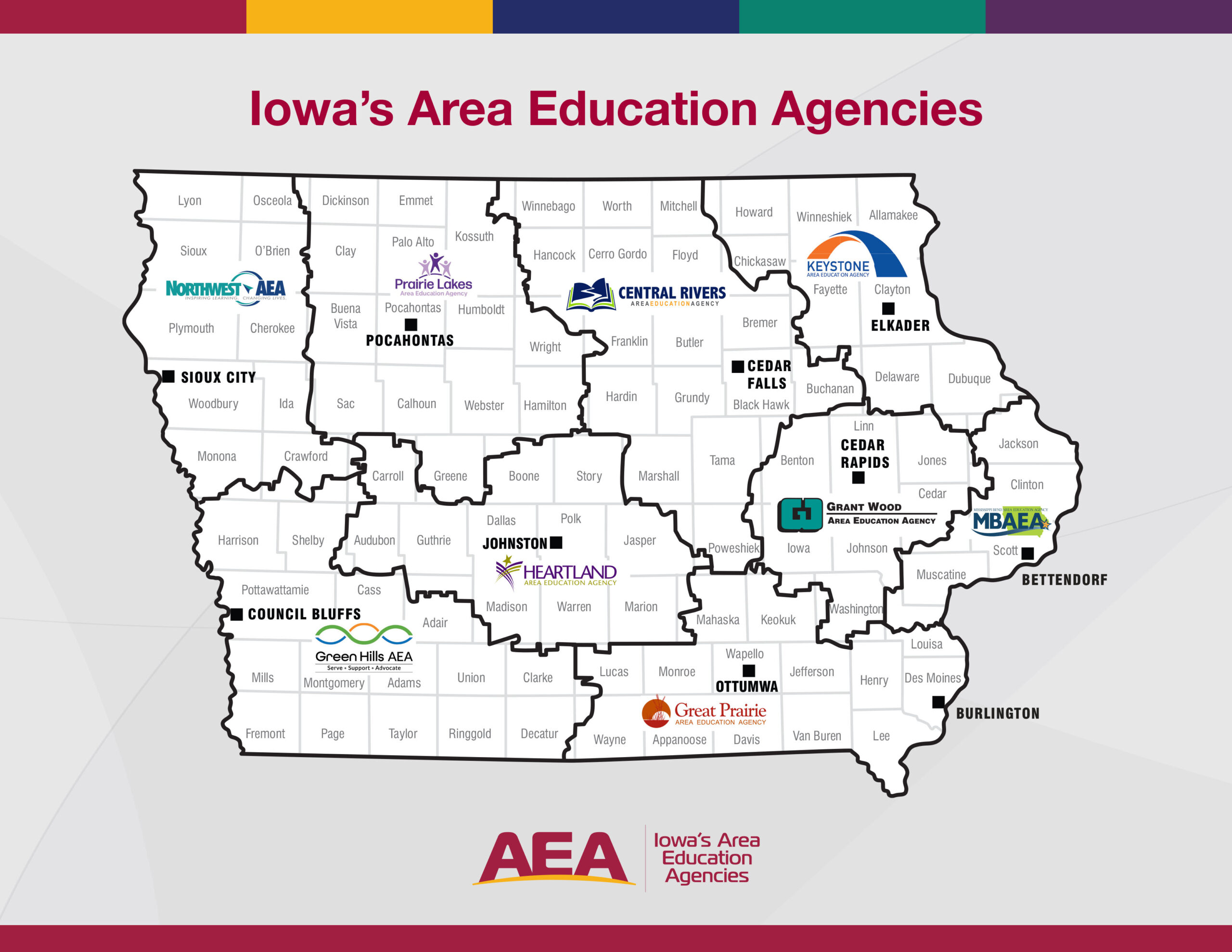
Wondering which Area Education Agency serves your child's school? Refer to the map below.
| AEA Dyslexia Contacts | ||
|---|---|---|
| Central Rivers AEA Heather Gould |
Grant Wood AEA Bill Poock |
Great Prairie AEA Amanda Seeley |
| Green Hills AEA Allison Grandfield |
Heartland AEA Susie Meade |
Keystone AEA Barb Schwamman |
| Mississippi Bend AEA Susan Downs |
Northwest AEA Emily Koson |
Prairie Lakes AEA Chris Wells |